
Ionic Power 2026
Is Comfort the Price You Pay for a Diamond?
The short verdict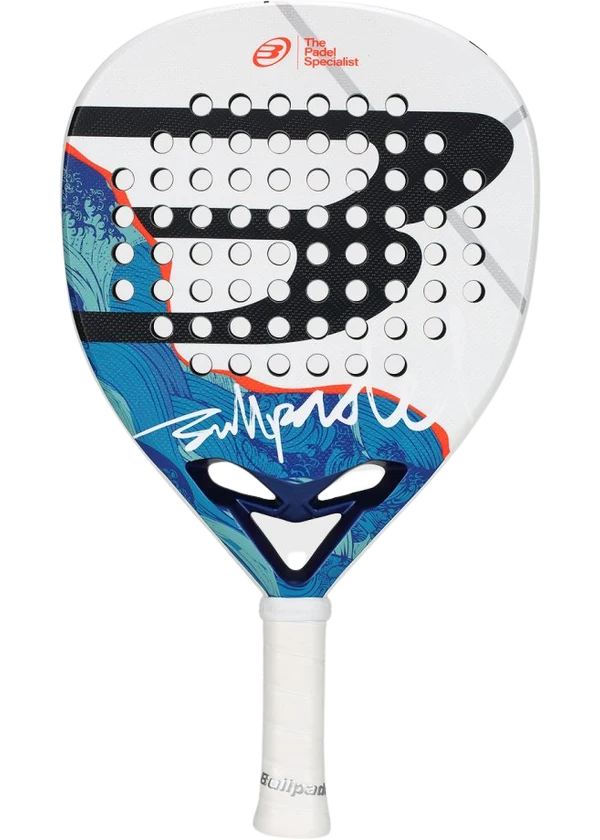


8 Parameters
Ionic Power 2026
On this page
Review
Bullpadel Ionic Power 2026 Review — Is Comfort the Price You Pay for a Diamond?
Diamond-shaped rackets have a reputation problem. Too many of them offer raw power at the cost of arm fatigue, stiff feedback, and a sweetspot the size of a coin. The Bullpadel Ionic Power 2026 enters that conversation with a different proposition — a diamond that doesn’t punish you for playing three sets. The tension it resolves is real, but resolving it costs you something on the other end of the court.
Built around a MultiEVA dual-density foam core, the Ionic Power 2026 uses a graduated construction — the outer layer is denser for explosive ball output on hard shots, while the inner layer absorbs pace on slower exchanges, lending the racket an adaptive quality uncommon in this price segment. The surface is Glaphite, Bullpadel’s proprietary carbon-and-fiberglass blend, finished with a 3D Grain texture for added spin engagement. The frame runs CarbonTube construction — 100% carbon for torsional rigidity — and is reinforced by the XForce structural system. A double bridge anti-vibration system sits inside the handle. Shape is diamond, balance is high at 268mm, stiffness 48, and declared weight sits between 360–375g depending on the source.
Power lands at 8.2 — the highest score on the sheet, and the clearest signal of what this racket is built to do. Attacker 7.71 · Hybrid 7.57 · Defender 7.38. The 0.47-point gap between Attacker and Defender is the whole story — this racket has a clear directional identity, and the closer you are to the net, the more it rewards you.
Performance Breakdown
How the Bullpadel Ionic Power 2026 Plays
STABILITY 7.6
The Diamond Delivers — Especially Overhead
High balance in a diamond shape is an old formula for a reason — it concentrates mass where contact happens on volleys and smashes. On the Ionic Power 2026, that physics is confirmed by an 8.2 Power score, which places it firmly at the top end of its price class. The XForce reinforcement system contributes here too, reducing frame flex at impact so energy transfers to the ball rather than dispersing through the frame. Stability at 7.6 validates this — the racket doesn’t twist on off-axis contact, which matters more than most players realize until they hit a wide ball at full swing. Together, these two scores explain why the Attacker profile leads by a clear margin.
SWEETSPOT 7.2
Comfortable for a Diamond — That’s Not Faint Praise
A Comfort score of 7.8 on a diamond-shaped racket is genuinely unusual. The credit goes to the dual-density MultiEVA core — the softer interior layer absorbs shock on low-pace exchanges, while the double bridge anti-vibration system in the handle filters residual impact before it reaches the forearm. Unlike the Ionic Control, where the dual-density system is tuned to cushion and redirect, here it is tuned to amplify output first and manage the physical cost second — the Comfort score reflects that priority order accurately. Sweetspot at 7.2 is solid without being generous — you’ll feel mishits, but they won’t punish you.
PLAYABILITY 7.4
Control Is There — When You’re Going Forward
Control and Playability both land at 7.4, which is a respectable figure — but the context matters. The dual-density core contributes meaningfully here: on slower exchanges, the inner foam layer softens the ball response, giving back-of-court players more margin. The 7.4 Control score reflects that the racket can be directed, not just swung. But this is a racket built for the offensive player moving through the court, and the Defender’s 7.38 profile score makes the positional hierarchy explicit. Control is functional; it’s not the point.
MANEUVERABILITY 7.1
Spin Works; Maneuverability Is the Trade-Off You’re Making
The 3D Grain surface texture does genuine work — Spin at 7.3 is not exceptional, but it’s competitive for this category and enough to put rotation on bandejas and serves without active technique adjustment. Maneuverability at 7.1 is the lowest score on the sheet and the clearest expression of the diamond’s physics: high balance means the head is working for you on full swings, but active play at the net requires more deliberate wrist engagement. If your game depends on fast hands and reactive volleys, that 7.1 is worth noting. Among all diamond rackets in this segment, it’s an honest trade.
Technology
XForce + MultiEVA: Does a Softer Core Change What a Diamond Can Do?
The XForce system is Bullpadel’s internal structural reinforcement — it runs through the frame to reduce torsional deformation at impact. In practical terms, this means that when you make contact toward the edges of the face, less energy escapes through frame flex. The evidence is in the Stability score (7.6) and the Power figure (8.2): a less stable diamond wouldn’t deliver both. XForce isn’t a comfort technology — it’s a stiffness technology that happens to make the racket feel more consistent.
The more interesting system is the dual-density MultiEVA core. On the Ionic Power, the outer foam layer is tuned to release energy aggressively — fast ball exit on volleys and smashes is the priority, and the 8.2 Power score is the direct result. The inner layer manages the physical cost of that output, softening impact feedback and protecting the arm across longer sessions. This is the opposite emphasis from the Ionic Control, where the same dual-density system is configured to absorb and redirect rather than amplify. The Comfort score of 7.8 reflects how well the cost-management side of the equation works — it’s the system doing damage control after the outer layer has done its job.
Glaphite — the carbon-and-fiberglass surface blend — sits in between full carbon (stiff, powerful, less forgiving) and full fiberglass (soft, comfortable, less powerful). Bullpadel uses it across several lines to find that middle ground, and on the Ionic Power 2026 it contributes to both the Comfort score and the Spin engagement from the 3D Grain texture.
Who benefits: an intermediate-to-advanced offensive player who plays long sessions and can’t afford to sacrifice arm health for power. The technology stack here is specifically designed for that person — not for the elite player who has adapted to rigid diamonds, and not for the beginner who doesn’t yet generate the pace to activate the outer foam layer. Explore the full Bullpadel lineup to see where it fits relative to the rest of the collection.
Player Fit
Who Should Buy the Bullpadel Ionic Power 2026?
The Offensive Player Who Needs to Last Three Sets
If you’re the type who plays three or four times a week, attacks the net hard, and has started feeling the consequences in your forearm by the third set — this racket was designed with you in mind. The 8.2 Power and 7.6 Stability give you the offensive ceiling you’re looking for on smashes and bandejas. The 7.8 Comfort, backed by the dual-density core and anti-vibration bridge, means you’re not trading arm health for performance. You’re at intermediate-to-advanced level, your net game is the strong part of your arsenal, and you need a weapon that doesn’t make you choose.
Defensive Players and Fast-Hands Net Specialists
The Defender profile score of 7.38 isn’t a warning — it’s a disqualification if your game is built around court coverage, consistent back-of-court defense, and redirecting pace. The Maneuverability score of 7.1 tells the same story from a different angle: reactive net play that depends on fast wrist adjustment will feel labored. The high balance point is working against you in those moments, not for you. If you play predominantly from the back, or your primary skill is absorbing and redirecting rather than finishing, a round or drop-shaped racket will serve you better. The Ionic Power 2026 has a clear direction of travel, and it’s toward the net.
FAQ
Frequently Asked Questions
What is the PadelVerdict score for the Bullpadel Ionic Power 2026?
The overall PadelVerdict score is 7.8, with no Consensus Modifier applied. Specs are consistent across multiple markets, but no independent field measurements exist yet — so the score reflects commercial data without a community correction in either direction. Profile breakdown: Attacker 7.71, Hybrid 7.57, Defender 7.38. The 0.47-point gap between Attacker and Defender confirms this is a directional racket, not a versatile one.
Is the Bullpadel Ionic Power 2026 good for intermediate players?
Yes, conditionally. The Playability score of 7.4 and the forgiving dual-density core make it accessible for intermediates with an offensive mindset — you don’t need elite technique to activate the power. But the 7.1 Maneuverability means you need enough physical consistency to handle a head-heavy diamond. If you’re earlier in your intermediate stage and still developing net reactions, a drop-shaped racket with better maneuverability will accelerate your game more reliably.
Is the Bullpadel Ionic Power 2026 good for attacking players?
Yes. Attacker profile 7.71, Power 8.2, Stability 7.6 — the numbers confirm what the design signals. Volleys, smashes, and bandejas are where this racket justifies its weight. The comfort engineering means you can play offensively for longer without arm fatigue becoming a factor. If you play the right side and live at the net, this is a strong fit. Check the best attacker rackets to see how it ranks against alternatives.
What is the actual weight of the Bullpadel Ionic Power 2026?
Declared weight ranges from 360g to 375g across different sources, with a single reference to 368g. No independent weigh-in measurements exist for this model at the time of publication. A 15g variance in manufacturer specs is larger than typical and worth noting — at the top of that range, you’ll feel it on extended volleys. Until independent measurements are available, treat the weight as approximately 368g with real-world variance possible in either direction.
How does the Bullpadel Ionic Power 2026 compare to the Ionic Light 2026?
The Ionic Light sits in hybrid territory at a lower price point. The choice is straightforward: if your game is primarily offensive and you want maximum power on overhead shots, the Ionic Power is the right model. If you play an all-court game, want more maneuverability, or are earlier in your development, the Ionic Light’s hybrid profile will give you more flexibility without asking you to commit to a full attacking identity. Read the full Ionic Light 2026 review for the complete breakdown.
Why does the Bullpadel Ionic Power 2026 have a Consensus Modifier of 0?
The modifier is zero because the data is consistent but unvalidated. Multiple commercial sources all describe the same racket in the same terms — no contradictions, no red flags. But there are no independent testers who’ve physically measured the weight, stiffness, or balance point, and no player community feedback exists yet. Consistency across commercial sources is a baseline expectation, not a signal of exceptional quality. If independent measurements or player feedback emerge that contradict or confirm the specs, the modifier — and the score — will be updated.
Similar Rackets
Independent testing, funded by readers
No brand deals, no sponsored picks. If you found this useful, you can support the next round of tests with a small tip.

