
Ultimate Pro Smash 2026
Is This the Smash Weapon Intermediate Attackers Have Been Waiting For?
The short verdict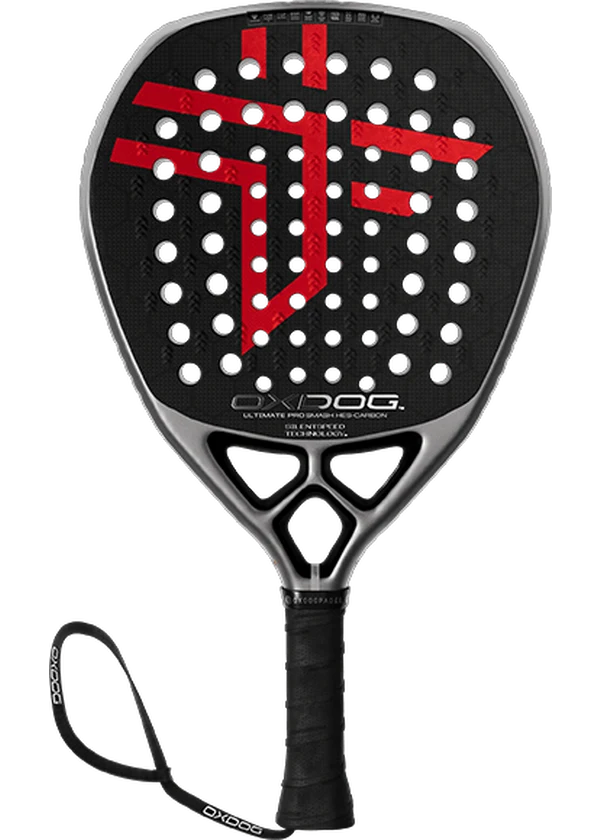
8 Parameters
Ultimate Pro Smash 2026
On this page
Review
Oxdog Ultimate Pro Smash 2026 Review: Is This the Smash Weapon Intermediate Attackers Have Been Waiting For?
The tension in the upper end of the intermediate market is always the same: you want a racket that delivers genuine attacking punch without demanding professional-level timing on every swing. Most diamond rackets in this tier force the trade-off — you get the power ceiling, but the control floor drops fast and the maneuverability penalty makes you slow in fast exchanges. The Oxdog Ultimate Pro Smash 2026 tries to sidestep that compromise with a 30mm ultra-thin frame, and the on-court case it builds is hard to ignore.
Built around an EVA medium/hard foam core and high-density HES carbon hitting surfaces with a textured sandy finish, the frame runs a notably narrow 30mm profile — thinner than the 38mm standard for pro-level power rackets. Oxdog layers in several proprietary systems: PowerRibs (frame reinforcements channeling energy and reducing vibration), DSH Double Size Holes (enlarged holes that widen effective playability outside the sweetspot), Vibradamp silicone inserts, and RBS — a removable 8g plug in the handle that lets players adjust balance and total weight. The shape is diamond, balance is high at 268mm, and declared weight sits in the 365–370g range. This is a pure Oxdog attacking tool.
Power leads at 8.8 — the highest single parameter in this profile. Attacker: 8.4 · Hybrid: 7.93 · Defender: 7.4. The 1.0-point gap between Attacker and Defender scores tells the story directly: this racket has a clear identity, and asking it to play a different role will cost you.
Performance Breakdown
How the Oxdog Ultimate Pro Smash 2026 Plays
STABILITY 8.3
The Smash Ceiling Is Genuinely High
High-balance diamond rackets often deliver power at the cost of swing-through stability — the frame twists on off-center contact and energy bleeds away. The HES carbon construction and PowerRibs system address this directly, which is why Stability lands at 8.3 even as Power hits 8.8. The combination means the racket doesn’t just generate pace; it holds that pace on slightly mistimed smashes too. For overhead-focused intermediate players, this pairing is the core argument for the frame.
PLAYABILITY 7.6
30mm Does Real Work in the Overhead Game
Maneuverability at 7.9 is the number that separates this racket from most of its diamond-class competitors — at 368g with high balance, you’d expect something heavier in the hand. The narrow 30mm profile cuts through the swing arc faster, and multiple sources note the racket feels meaningfully lighter on court than its declared weight suggests. Playability at 7.6 reflects the DSH system’s contribution: the enlarged holes improve response on off-center contact, extending the effective hitting zone beyond what a pure diamond frame typically offers. Among diamond rackets at this weight, that’s an unusual combination.
SWEETSPOT SIZE 7.4
Texture Earns Its Score; Sweetspot Is Decent, Not Generous
The sandy HES carbon surface generates genuine bite on bandejas and víboras — Spin at 7.6 is backed by the textured finish rather than a soft core doing the work, which means spin holds up at full swing speed rather than softening when you hit hard. Sweetspot Size at 7.4 is respectable for a diamond frame but should be read honestly: this is not a forgiving racket for wild swings. The DSH system raises the floor, but the ceiling for sweetspot size in this shape has structural limits, and 7.4 reflects that accurately.
COMFORT 7.0
The Trade-Off Is Real — and Predictable
Control at 7.2 and Comfort at 7.0 are the honest cost of the power and stability numbers above. The stiff HES carbon construction that transfers energy so efficiently on smashes also reduces feedback precision on touch shots and defensive volleys — control degrades noticeably when you’re blocking rather than driving. Vibradamp inserts bring comfort above floor-penalty territory, but players with arm sensitivity should treat 7.0 as a genuine signal rather than reassuring language. The PowerRibs system manages vibration better than an unprotected stiff carbon frame would, but this is not a comfortable racket — it’s a manageable one.
Technology
PowerRibs + DSH: Engineering Around the Diamond’s Weaknesses — Does It Hold Up?
PowerRibs are structural reinforcements running along the frame that serve two functions simultaneously: they channel impact energy toward the hitting surface (contributing directly to that 8.8 Power score) while reducing the torsional flex that bleeds power on off-center strikes (which is why Stability holds at 8.3 despite the top-heavy balance). This isn’t vibration absorption through softness — it’s vibration control through structural rigidity, which is a meaningfully different engineering choice. The result is a stiff racket that doesn’t punish as harshly as stiff rackets without this system.
DSH — Double Size Holes — enlarges specific holes in the pattern to reduce air resistance during the swing and improve contact outside the central sweetspot. The practical effect shows up in the Maneuverability score (7.9 for a 368g diamond is notable) and in Playability at 7.6, which is above average for this shape. It doesn’t transform the racket into a forgiving tool, but it meaningfully raises the floor on mistimed shots.
The RBS system — an 8g removable plug in the handle — gives players genuine customization over balance point and total weight. For attackers who want to dial in the feel of overhead contact, or for players who find 368g slightly heavy in extended rallies, this is a practical feature rather than a marketing addition. Removing the plug shifts both the weight and balance marginally toward the handle, softening the power ceiling while improving maneuverability fractionally. The choice is yours, and the system is simple enough that it actually gets used.
Vibradamp silicone inserts address what Comfort at 7.0 reflects: this is a stiff construction that requires mitigation. The inserts lower peak vibration transmission to the arm, keeping this inside acceptable range for regular play without arm complaints — but players with existing elbow or shoulder issues should still test carefully before committing. The technology buys margin, not immunity.
Player Fit
Who Should Buy the Oxdog Ultimate Pro Smash 2026?
The Intermediate Attacker Who’s Ready to Commit to the Overhead Game
If you’re the type who lives at the net, wins points with smashes and aggressive víboras, and has enough technique to swing decisively rather than defensively — this frame was built around your game. The Attacker score of 8.4 is carried by Power at 8.8 and Stability at 8.3: your hardest overhead shots arrive with pace and hold their line even when contact isn’t perfect. Maneuverability at 7.9 means you won’t feel sluggish transitioning between shots, and the DSH system gives you just enough margin on slightly late contact to stay dangerous. You’ve been using a round or teardrop frame because power rackets felt too clunky — this one won’t.
Defensive Players, Beginners, and Anyone Still Building Technique
The Defender score of 7.4 is the honest number here — and it’s driven by Control at 7.2 and Comfort at 7.0. If your game is built on patience, wall play, and consistency from the back, a stiff diamond frame with high balance is working against you on almost every rally ball. The racket rewards decisive, aggressive swings; passive blocking produces imprecise results and accumulates arm stress over time. Beginners will find the technique demands of a stiff 8.8 Power tool unforgiving before fundamentals are solid. If control and consistency are your priority, the all defender rackets category will serve you far better than this one.
FAQ
Frequently Asked Questions
What is the PadelVerdict score for the Oxdog Ultimate Pro Smash 2026?
The PadelVerdict score is 8.5, with a Consensus Modifier of +0.1 applied. Profile breakdown: Attacker 8.4 · Hybrid 7.93 · Defender 7.4. Specs are consistent across multiple sources (Data Quality: neutral), specialist sources across multiple markets align on shape, core, and surface classification with no contradictions found (Field Validation: positive), but no independent physical measurements exist to go further (Market Correction: neutral). That Field Validation component is what earns the +0.1. The 1.0-point Attacker-to-Defender gap is unusually clear: this is a specialist frame, not a versatile one.
Is the Oxdog Ultimate Pro Smash 2026 good for intermediate players?
Yes — but only for attacking intermediates. The relevant parameter is Control at 7.2: if you’re still building shot consistency and rely on the racket to absorb errors, this score signals friction rather than support. Intermediates with a clear offensive game and established technique will find the Power-Stability pairing genuinely rewarding. Intermediates still developing ball control should look at a drop or round shape with a softer core first.
Is the Oxdog Ultimate Pro Smash 2026 good for attackers?
Yes. Attacker score of 8.4, led by Power 8.8 and Stability 8.3 — those aren’t soft numbers. Add Maneuverability at 7.9 for a diamond frame at this weight, and the racket makes a strong case for net-dominant attackers who want pace without the sluggishness most power rackets carry. If smashing is your primary weapon, this validates the instinct. Browse the full best attacker rackets for direct comparisons.
What is the actual weight of the Oxdog Ultimate Pro Smash 2026?
Declared weight varies across sources: Sources across multiple markets report between 365g and 370g — a 5g spread that sits within acceptable tolerance. No independent on-court or camera-weighed measurements exist to confirm the exact figure. The RBS system adds or removes 8g via the handle plug, meaning real-world weight depends on configuration. On court, multiple sources note the frame feels lighter than its declared weight — the 30mm profile reduces swing resistance perceptibly.
How does the Oxdog Ultimate Pro Smash 2026 compare to the Ultimate Pro Plus?
The choice maps to one question: how much swing speed do you generate naturally? The Pro Plus carries a wider 38mm frame — more forgiving, slightly more control-oriented, and better suited to players who want offensive capability without full commitment to an aggressive playing style. The Smash 2026 narrows to 30mm and raises the power ceiling in exchange for less margin. If your overhead game is your primary weapon and your technique is consistent, the Smash is the upgrade. If you value versatility across the whole court, the Pro Plus fits more players.
Why does the Oxdog Ultimate Pro Smash 2026 have a Consensus Modifier of +0.1?
The +0.1 reflects a process that separates consistency from validation. Specs appearing uniformly across sources earns neutral — that’s the baseline. What moves the modifier is specialist-level convergence: sources across multiple markets independently align on shape, core density, surface material, and frame profile with no contradictions found. That cross-market alignment without outliers is the condition for a positive adjustment. The ceiling stays at +0.1 because no independent physical measurements exist to go further.
Similar Rackets
Independent testing, funded by readers
No brand deals, no sponsored picks. If you found this useful, you can support the next round of tests with a small tip.

