
Viper Soft Juan Lebron 3.0
Can a Diamond Racket Have a Soft Side?
The short verdict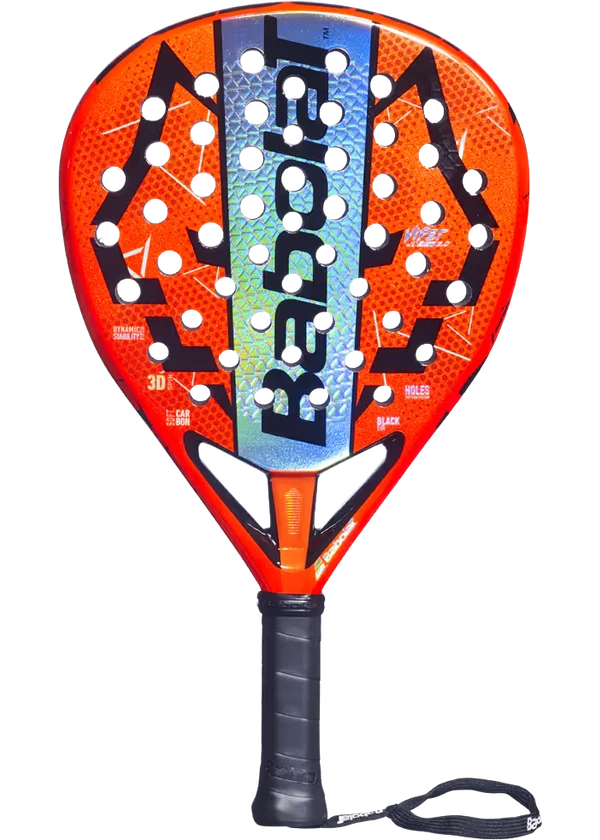


8 Parameters
Viper Soft Juan Lebron 3.0
On this page
Review
Babolat Viper Soft Juan Lebron 3.0 Review — Can a Diamond Racket Have a Soft Side?
Diamond-shaped rackets have always carried the same implicit promise: raw power at the cost of comfort, demanding players who can live with the consequences. The Babolat Viper Soft Juan Lebron 3.0 is a direct challenge to that trade-off — positioned inside one of padel’s most aggressive lineups as the version that doesn’t punish your arm for choosing offense. The question isn’t whether the comfort claim holds. It’s whether the Soft variant gives away enough to matter.
The construction starts with a Black EVA medium-hardness core — a material chosen for its elasticity and dwell time — paired with Soft Carbon (3K twill weave) on the surface, which provides texture through the 3D Spin raised patterns without the brittleness of conventional carbon. The frame integrates the Dynamic Stability System, a reinforced central bar through the heart of the head, and the Vibrabsorb System uses elastomers at key contact points to cut transmission vibration. Balance sits at 271mm, stiffness at 62 — head-heavy by design, but tuned down from the stiffer Technical variant in the same lineup. Declared weight is 363g. Explore the full Babolat racket lineup for context.
Comfort scores 8.3 — the highest parameter outside Power and Stability in a diamond-shaped attacker’s racket. That combination rarely coexists at this level. Profile breakdown: Attacker 8.48 · Hybrid 8.00 · Defender 7.71. The 0.67-point gap between Attacker and Defender confirms a clear offensive identity, but the Hybrid score is close enough that all-court players aren’t shut out.
Performance Breakdown
How the Viper Soft Juan Lebron 3.0 Plays
STABILITY 8.6
The Diamond Doesn’t Lie
At 271mm balance, this is a head-heavy weapon built for terminal-velocity contact. A Power score of 8.8 and a Stability score of 8.6 mean that the smash stays directional rather than spraying — the Dynamic Stability System’s reinforced bar reduces torsion on off-axis impacts, keeping ball exit accurate under pressure, not just under ideal contact. These two scores are the Viper Soft’s calling card.
SPIN 8.2
The Surprising Argument for Longevity
An 8.3 Comfort score in a racket with this balance profile is the story the specs alone don’t tell. The Soft Carbon surface flexes on impact rather than transmitting peak force instantly — measurably more arm-friendly than the Technical variant, and described consistently across multiple sources as reducing arm fatigue in long sessions. The 3D Spin raised texture patterns push Spin to 8.2, adding genuine bite on viboras and bandejas without requiring textbook technique.
CONTROL 7.6
Honest Numbers in the Middle
Control at 7.6 and Playability at 7.7 aren’t weaknesses — they’re the honest cost of the power-first architecture. The head-heavy balance makes court-level defensive exchanges harder to calibrate, and the 62 stiffness rating, while softer than the Technical version, still means precise placement feedback is less forgiving than a round or teardrop frame. These scores separate competent intermediates from the advanced players this racket is genuinely designed for.
MANEUVERABILITY 7.2
Where Diamonds Always Make You Pay
Sweetspot at 7.4 and Maneuverability at 7.2 are the lowest scores in this profile, and they connect directly to the Defender score of 7.71. A diamond shape concentrates the hitting zone high in the frame, rewarding aggressive, prepared contact but punishing anything rushed or reactive. The Soft Carbon expands the margin slightly versus harder diamond frames, but quick-exchange defenders and reactive net players will feel the limitations. This is the diamond racket trade-off in every lineup.
Technology
Soft Carbon + Dynamic Stability System: Does Softer Mean Weaker?
Soft Carbon is a 3K twill carbon weave that introduces controlled flex into the impact phase. Where standard carbon transfers force almost instantaneously, the Soft Carbon surface deforms slightly on contact, extending dwell time and spreading peak vibration across a longer window. This flexibility also widens the functional sweetspot on off-center hits — which is where the Sweetspot score of 7.4 becomes more forgiving in practice than the raw number suggests for this shape category.
The Dynamic Stability System works in opposition to the Soft Carbon’s flex — a reinforced central bar in the heart of the head stiffens the frame structurally, preventing energy from dissipating sideways on impact. This is what drives the Stability score to 8.6 despite the softer surface: the frame doesn’t twist, it absorbs. The combination explains the unusual pairing of an 8.8 Power score and an 8.3 Comfort score in the same racket.
The 3D Spin raised texture patterns push Spin to 8.2 by creating micro-grip zones across the hitting surface — on viboras and sliced bandejas, this translates to a sharper ball trajectory without adjusting your technique. The Vibrabsorb elastomer system handles residual vibration at the frame connection points that neither the Soft Carbon nor the EVA core eliminates completely. The player who benefits from all of this is specific: an advanced attacker who hits hard, plays frequently, and has started to feel diamond rackets in their arm after long sessions.
Player Fit
Who Should Buy the Viper Soft Juan Lebron 3.0?
The Attacker Who Plays Too Much to Ignore Their Arm
If you play three or four times a week, rely on the smash as your finishing shot, and have started noticing stiffness after long sessions — this racket was built for you. Power 8.8 and Stability 8.6 mean your offensive game doesn’t make concessions, while Comfort 8.3 handles the accumulated toll. Spin 8.2 adds weapon-level viboras without changing your technique. The Attacker profile score of 8.48 confirms the fit analytically. If you’ve been playing a harder diamond and your arm has an opinion, you’ll feel the difference within the first session.
Defenders, Beginners, and Anyone Who Thinks “Advanced” Is About Ambition
The Defender score of 7.71 is the lowest profile number, and it tells you exactly who this racket isn’t for. If your game depends on reading the opponent, reacting late, or grinding baseline exchanges, Maneuverability at 7.2 and Sweetspot at 7.4 will expose you before the power helps. Beginners will struggle with the head-heavy balance — these are specs that require an already-developed swing to convert into results. And if you want the absolute power ceiling: the Technical Viper delivers slightly more raw punch at the smash. The Soft is the comfort play.
FAQ
Frequently Asked Questions
What is the PadelVerdict score for the Babolat Viper Soft Juan Lebron 3.0?
The overall PadelVerdict score is 8.6, with a +0.1 Consensus Modifier applied. Spec consistency was validated across multiple markets, with comparative testing independently confirming the comfort advantage over the Technical version — giving the data above-average reliability for a recent launch. Profile breakdown: Attacker 8.48 · Hybrid 8.00 · Defender 7.71.
Is the Babolat Viper Soft Juan Lebron 3.0 good for advanced players?
Yes — specifically for advanced players with an established offensive game. The head-heavy balance and 62 stiffness demand a technically sound swing to convert the Power score of 8.8 into results. Intermediate players looking to grow into an attacker profile should consider options with more elasticity and a lower entry barrier.
Is the Babolat Viper Soft Juan Lebron 3.0 good for attacking players?
Yes, without qualification. Attacker profile score: 8.48. Power 8.8, Stability 8.6, Spin 8.2 — every offensive parameter is at or above the threshold for elite attacker classification. If your game is built around net pressure, smashes, and viboras, this racket validates that instinct directly.
What is the actual weight of the Babolat Viper Soft Juan Lebron 3.0?
Declared weight is 363g ±10g. Minor variance across sources falls within the manufacturer’s stated tolerance and below the perceptibility threshold on court.
How does the Babolat Viper Soft Juan Lebron 3.0 compare to the Technical Viper Juan Lebron 3.0?
Same mold, different surface carbon. The Technical version delivers slightly higher peak power at the smash and a firmer feel on contact — the choice for players who want maximum output and have no arm concerns. The Soft trades a marginal power ceiling for meaningfully better comfort and vibration absorption. If you play frequently and your sessions are long, the Soft is the better investment.
Why does the Babolat Viper Soft Juan Lebron 3.0 have a Consensus Modifier of +0.1?
The +0.1 reflects strong cross-market spec consistency and independent comparative testing that validated the comfort claim against the Technical version — a specific, measurable finding that goes beyond manufacturer description. That level of field validation at this stage of a product cycle earns a positive modifier.
What is the best padel racket for attacking players?
The Babolat Viper Soft Juan Lebron 3.0 is one of the top options for advanced attackers who need both power and session longevity. For a full comparison across the attacker category, see our best attacker padel rackets guide.
Similar Rackets
Independent testing, funded by readers
No brand deals, no sponsored picks. If you found this useful, you can support the next round of tests with a small tip.

