
Radical Team Light 2026
Is This the Defender’s Entry Point Done Right?
The short verdict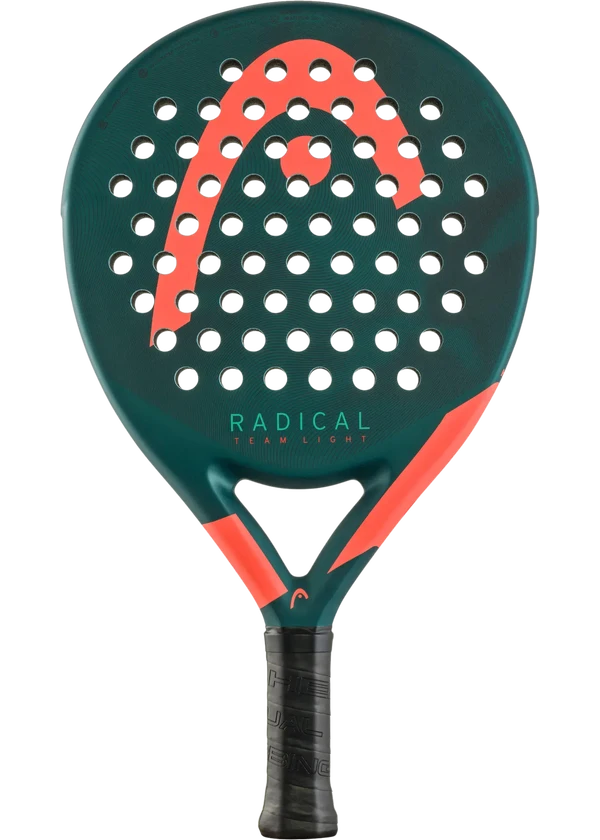


8 Parameters
Radical Team Light 2026
On this page
Review
Head Radical Team Light 2026 Review — Is This the Defender’s Entry Point Done Right?
There’s a persistent tension in beginner-to-intermediate padel rackets: manufacturers chase low weight to reduce fatigue, but stripping mass often sacrifices the stability and sweetspot size that developing players need most. The rackets that solve this trade-off intelligently are rare. The ones that just make something lighter and call it progress are not. The Head Radical Team Light 2026 sits squarely in that question — does the “light” designation add value, or does it subtract it?
The specs tell a considered story. Round shape, 340g declared weight, 270mm low balance point, Control Foam core, fibreglass surface, 38mm beam profile, and Graphene Inside frame reinforcement. Head has layered multiple proprietary systems here — Auxetic 2.0 for impact adaptability, Smart Bridge for frame architecture, Soft Butt Cap for handle vibration absorption — producing a racket with stiffness rated at 38 on the PadelVerdict scale. Multiple sources consistently reference this as the lightest model in the Head Radical lineup for 2026, positioned explicitly for players who prioritize arm comfort and tactical control over raw power generation.
Maneuverability at 8.8 is the headline — but Comfort (8.3) and Sweetspot Size (8.1) tell the deeper story. Attacker: 6.39 · Hybrid: 7.72 · Defender: 8.07. The 0.35 gap between Defender and Hybrid is meaningful: this racket has a clear role, and deviating from it costs you.
Performance Breakdown
How the Head Radical Team Light 2026 Plays
PLAYABILITY 8.6
The Low Balance Point Is Doing Real Work
At 270mm balance and 340g declared weight, this racket produces genuine quickness — not just marketing language about lightness. The round shape keeps mass distributed evenly, and the result is a racket that reacts rather than swings, making it exceptionally effective for net exchanges and defensive recovery. Maneuverability at 8.8 is among the highest scores in the intermediate defender category. Playability follows at 8.6, reflecting how quickly this racket lets developing players feel capable — the learning curve flattens noticeably because every off-tempo swing still produces usable results.
COMFORT 8.3
Control Foam Earns Its Name Here
Control Foam at this stiffness rating (38) produces genuine dwell time — the ball stays on the face long enough for intermediate players to feel they’re directing shots rather than deflecting them. Control scores 8.2, which reflects consistent placement rather than surgical precision, appropriate for the target level. Comfort at 8.3 is the figure that matters most for players managing arm fatigue: the combination of fibreglass surface, Soft Butt Cap, and Auxetic 2.0 vibration management works as a system rather than a checklist, making extended sessions genuinely less taxing.
SPIN 6.2
Forgiving Face, Modest Topspin
The 490cm² head size and round mold produce a sweetspot score of 8.1 — genuinely forgiving on off-center strikes, which is exactly what intermediate defenders need when the ball arrives at pace and positioning isn’t perfect. Spin at 6.2 is the honest counterpoint: fibreglass provides a smooth, comfortable surface but doesn’t generate the textured friction that builds spin-heavy shot variety. For a defensive baseline player focused on placement, this trade-off is acceptable. For a player looking to add loop and kick to their repertoire, the number tells you directly that this isn’t the right tool.
STABILITY 6.4
The Weight Reduction Has a Cost — Know It Before You Buy
Power at 5.8 is the lowest score in the profile, and it’s the direct consequence of stripping mass to achieve the “Light” designation. This isn’t a flaw — it’s a design choice that suits its intended player — but players expecting anything beyond functional groundstrokes will find the pace ceiling low. Stability at 6.4 tells a similar story: Graphene Inside reinforcement helps, but a 340g racket with a 270mm balance point will twist more on heavy impacts than heavier, higher-balanced alternatives. These two scores define who should not buy this racket as clearly as the top scores define who should.
Technology
Control Foam + Graphene Inside: Does the System Stack Up or Just Sound Good?
Head’s Control Foam is the core of this racket’s identity, and it functions as advertised within clear parameters. The foam compound is tuned for dwell time over rebound energy — meaning the ball stays on the face fractionally longer on contact, which translates directly to the 8.2 Control score. For players developing shot placement and directional consistency, that extra moment of contact is genuinely useful. It’s not a premium tour-level core, but it’s well-matched to intermediate swing speeds and timing margins.
Graphene Inside places structural reinforcement in the shaft and upper frame rather than distributing it throughout. The intent is frame stability without adding weight across the full racket — which explains how Head achieves a 6.4 Stability score despite the light overall mass. It’s a partial answer to the stability deficit that comes with low-weight construction. It doesn’t fully close the gap against heavier rackets — that 6.4 is honest about the limit — but it prevents the frame from feeling hollow or unpredictable on harder strikes.
Auxetic 2.0 adds a layer of impact adaptability — a structural lattice that deforms slightly at contact and rebounds to distribute vibration rather than transmit it directly to the hand. This is what pushes Comfort to 8.3 and makes the racket genuinely arm-friendly over longer sessions. The Soft Butt Cap at the handle end completes the vibration chain, absorbing residual energy before it reaches the wrist. Together, these three systems explain why players managing elbow sensitivity consistently appear in the target audience for this racket across round-shaped rackets at this level.
The fibreglass surface is the one choice that creates a genuine trade-off: it maximizes comfort and dwell time, but it’s the direct reason Spin sits at 6.2. Carbon surfaces generate more friction on contact; fibreglass prioritizes feel. Head made the right call for this racket’s intended audience — but players who want to add significant topspin should note the ceiling clearly.
Player Fit
Who Should Buy the Head Radical Team Light 2026?
The Arm-Conscious Defender Building Their Game
If you’re the type who plays two to three times per week, feels the session in your elbow by the third set, and cares more about keeping the ball in play than winning the point outright — this racket was built around you. The Comfort score of 8.3, Maneuverability of 8.8, and Sweetspot Size of 8.1 create a margin for error that lets intermediate players compete without punishing technical imperfections. The Defender score of 8.07 confirms the primary role. Young players, players returning from arm injuries, and those who’ve been warned off heavier rackets by a physio will find this racket genuinely supportive rather than just “lightweight.” You’ll feel capable from the first session — and that accelerates development faster than most players expect. Curious about the alternatives? See how it stacks up in our intermediate player ranking against every racket in its class.
Attackers and Players Who’ve Outgrown the Comfort Safety Net
If your game is built around putting pressure on opponents — deep smashes, fast volleys, aggressive bandeja — Power at 5.8 will feel like a ceiling you hit constantly. Stability at 6.4 means the frame gives on heavier strikes in a way that more experienced players will register immediately as imprecision. The Attacker score of 6.39 is a gap, not a nuance: 1.68 points separate the Defender and Attacker profiles, and that distance is the whole story for players who want to impose rather than resist. If you’ve been playing for two or more years and feel like you’re generating your own pace, look elsewhere — the Head Radical Pro 2026 is the natural next step up within the same series.
FAQ
Frequently Asked Questions
What is the PadelVerdict score for the Head Radical Team Light 2026?
The overall PadelVerdict score is 8.3, with a Consensus Modifier of +0.1 applied. Specs are consistent across multiple markets, and specialist sources converge on key parameters with no contradictions found — that cross-market alignment is what earns the positive adjustment. No independent physical measurements exist to push it further. Profile breakdown: Attacker 6.39 · Hybrid 7.72 · Defender 8.07. The 1.68-point gap between Attacker and Defender scores tells you exactly what this racket is and isn’t — don’t ignore it.
Is the Head Radical Team Light 2026 good for intermediate players?
Yes — directly. Playability at 8.6 is the key figure: this racket was designed to shorten the learning curve and forgive timing errors while still providing genuine directional control. Intermediate players building defensive consistency and net reactivity will find it accelerates their development. If you’re an intermediate already generating significant pace and seeking more power, the 5.8 Power score signals clearly that you need a different tool.
Is the Head Radical Team Light 2026 good for defenders?
Yes. Defender profile scores 8.07 — the highest of the three profiles by a clear margin. Maneuverability at 8.8 and Sweetspot Size at 8.1 are the two scores that make it work in defensive positions: quick reactions and a forgiving face when the ball arrives fast. If you want to explore other options in the same category, browse the best defender rackets on PadelVerdict.
What is the actual weight of the Head Radical Team Light 2026?
Declared weight is 340g ±10g — putting individual units anywhere from 330g to 350g depending on the specific racket. No independent on-court measurements have been recorded for this model. That ±10g variance is standard Head tolerance, but a unit landing at 350g will feel meaningfully different in hand compared to one at 330g — worth being aware of if you’re particularly sensitive to weight.
How does the Head Radical Team Light 2026 compare to the Head Radical Team 2026?
The Team Light is the arm-friendly, fatigue-reduction version; the standard Team carries more mass and likely a slightly higher balance point, giving it more natural stability and plow-through on harder shots. Choose the Team Light if arm comfort and maneuverability are the priority; choose the standard Team if you want more frame authority and can tolerate the extra weight over a full session. Two different player types — not two versions of the same one.
Why does the Head Radical Team Light 2026 have a Consensus Modifier of +0.1?
The +0.1 adjustment reflects the consistency and depth of the available data. Declared specs are stable across multiple markets, and specialist sources converge on the same technical picture — shape, weight, balance, core, and surface — with no contradictions found. That cross-market coherence is what moves the modifier from neutral to positive. What keeps it at +0.1 rather than higher is the absence of independent physical measurements: an on-court weight verification would be the data needed to support any further adjustment.
Similar Rackets
Independent testing, funded by readers
No brand deals, no sponsored picks. If you found this useful, you can support the next round of tests with a small tip.

