
Ionic Control 2026
The Defender’s Dilemma — Maximum Forgiveness or Maximum Ceiling?
The short verdict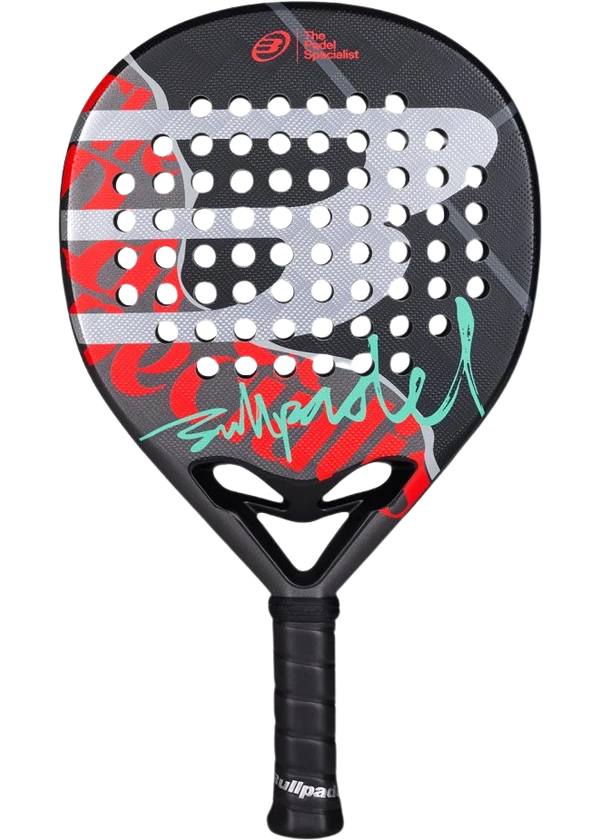


8 Parameters
Ionic Control 2026
On this page
Review
Bullpadel Ionic Control 2026 Review: The Defender’s Dilemma — Maximum Forgiveness or Maximum Ceiling?
There is a persistent tension in padel equipment between the racket that makes you feel competent and the one that makes you better. Control-oriented round shapes often resolve this in favour of accessibility — and occasionally sacrifice ceiling in the process. The Bullpadel Ionic Control 2026 arrives squarely in that territory: a round, low-balance defender’s tool built for the intermediate player who wins points through positioning and placement rather than aggression. The question is whether it does enough to justify its place against a crowded field of similarly forgiving options.
Structurally, the Ionic Control 2026 is built around Bullpadel’s MultiEva dual-density EVA core — a compact exterior layer designed to return pace on faster balls, a softer interior that absorbs and redirects slower ones. The face is Glaphite, a fibreglass-carbon hybrid that balances elasticity with feel, finished with a 3D Grain polygonal texture for friction and spin engagement. The frame runs CarbonTube (100% bidirectional carbon) for rigidity, with XForce internal reinforcement for torsional stability and a double bridge that cuts vibration at contact. Balance sits at 248mm — genuinely low — and the 38mm profile keeps swing weight manageable. Declared weight range is 365–375g.
The standout figure here is Sweetspot Size: 8.6 — exceptional for any category, and the single score that defines this racket’s personality. Power sits at 6.2, the honest cost of that forgiveness. Attacker: 7.0 | Hybrid: 8.08 | Defender: 8.35. The gap between Attacker and Defender tells you everything: this is a specialist’s tool, not a versatile one. Players who attack from the net will find the ceiling quickly.
Performance Breakdown
How the Bullpadel Ionic Control 2026 Plays
PLAYABILITY 8.5
Forgiveness This Wide Is a Design Choice, Not an Accident
Round shapes with low balance naturally push mass toward the handle, keeping the head light and the sweet zone broad — but the Ionic Control 2026 goes further than most. The MultiEva dual-density core plays a direct role: slower incoming balls find a softer interior that cushions and redirects cleanly, while faster balls engage the stiffer outer layer without that jarring deflection you get from single-density EVA. The result is a Sweetspot Size score of 8.6 and a Playability rating of 8.5 that reflect genuine structural intent. Off-center contact stays stable — the XForce reinforcement prevents the head from twisting on awkward defensive retrieves — and the overall experience is one of confident, reliable touch across a wide range of contact points.
STABILITY 7.8
Quick in the Hand, Honest About Its Limits Under Pressure
At 248mm balance and a 38mm profile, the Ionic Control 2026 moves with a speed that will surprise players stepping up from heavier, higher-balance options. A Maneuverability score of 8.5 reflects how genuinely quick this feels in transition — particularly on backhand resets and bandeja preparation when time is short. Stability at 7.8 is solid, though it carries the honest trade-off of a low-balance round: it holds well on clean defensive contact, but it won’t anchor a drive volley or an aggressive smash the way a diamond frame with higher swing weight can. The double bridge vibration damping contributes meaningfully here — structural integrity at contact is noticeably above average — but the stability score positions this correctly as a defensive tool rather than a net-domination platform.
COMFORT 8.2
The Back-Court Engine: Precision That Doesn’t Cost You the Next Morning
Control at 8.3 is where this racket earns its name. Lob placement, diagonal resets, deep ball management — the combination of a forgiving sweet zone and the elastic Glaphite surface creates a feedback loop that intermediate players can actually use to build technique rather than compensate for the frame. Comfort at 8.2 reflects both the medium-soft feel at contact and the vibration absorption delivered by the double bridge and the softer EVA interior — arm fatigue across longer sessions is genuinely lower than the stiffness rating might suggest.
POWER 6.2
Spin Is Functional; Power Is the Honest Ceiling
The 3D Grain polygonal surface texture does its job — spin generation on serves, víboras, and bandejas is above average for a round frame, and the 7.6 Spin score reflects a surface that grips the ball meaningfully without requiring aggressive technique. Power at 6.2 is the sharpest data point in this racket’s profile, and it connects directly to the 7.0 Attacker score — players who close points with pace will find the Ionic Control 2026 consistently coming up short when it matters most. This is not a flaw; it is a design priority. Among round-shaped rackets at this level, 6.2 is an honest and expected trade-off — but it means attackers and hybrid players who like to transition forward aggressively should look elsewhere.
Technology
MultiEva + Glaphite: Does Dual-Density Actually Deliver, or Is It Marketing?
MultiEva is Bullpadel’s dual-density EVA system — and on the Ionic Control 2026, it functions as the core of the racket’s playability identity. The outer foam layer is compact and firm, designed to return energy on faster incoming balls without absorbing pace you didn’t have to spare. The inner layer is lower-density — it deforms more at contact, cushioning the feel and extending dwell time on slower exchanges. The practical effect is a racket that responds differently depending on what the opponent gives you, which is exactly what a defensive back-court player needs. This architecture is the primary driver of the 8.6 Sweetspot Size and the 8.2 Comfort score — neither of those figures comes from the frame geometry alone.
Glaphite — the fibreglass-carbon hybrid face — adds a layer of elasticity that single-material carbon surfaces don’t offer. Carbon faces tend to be stiffer and more directional; fibreglass introduces flex that translates into a more forgiving rebound angle and a softer feel through the hand. Combined with the 3D Grain polygonal texture, the surface grips the ball fractionally longer at contact, which feeds the 7.6 Spin score and the 8.3 Control rating. This is where the Ionic Control 2026 earns its name in practice: not through precision engineering for advanced players, but through a surface that makes placement intuitive across a wide range of skill levels.
XForce structural reinforcement and the double bridge both address the racket’s torsional integrity — the 7.8 Stability score benefits directly from both. XForce reduces frame twist on off-center hits, which is critical for a round shape where contact points vary widely. The double bridge cuts vibration transmission through the handle, which contributes more to the Comfort figure than it does to Stability in isolation. Taken together, these systems make the Ionic Control 2026 a technically coherent package. It is built for a specific player — the intermediate defender building technique — and the technology stack points consistently in that direction. The Bullpadel lineup positions this as the control counterpart to the Ionic Power 2026, and the differentiation is genuine, not cosmetic.
Player Fit
Who Should Buy the Bullpadel Ionic Control 2026?
The Patient Builder Who Wins From the Back
If you’re the type who constructs points through placement rather than pace, resets under pressure without losing position, and wants a racket that won’t punish you for a slightly mistimed defensive lob — the Ionic Control 2026 is built specifically for you. The 8.6 Sweetspot Size absorbs the inconsistency that comes with intermediate back-court play; the 8.5 Maneuverability means you’re never late on a hard drive to the hip; and the 8.3 Control gives you the precision to put the ball where the point demands. Comfort at 8.2 means you can play extended sessions without your arm reminding you about it the next day. The Defender score of 8.35 isn’t an accident — if you recognise yourself in this description, this racket already knows who you are. It also earns its place in the complete intermediate racket guide for 2026, where its defender profile is compared on data against every alternative we’ve tested.
Anyone Who Closes Points — or Wants To
A Power score of 6.2 is not a gap — it is a structural position. If your game involves overhead smashes from mid-court, net approaches that require punch on the volley, or any ambition to finish rallies aggressively, the Attacker score of 7.0 tells the story before you even pick it up. The round shape and 248mm low balance trade swing-weight for comfort and speed — that swap comes directly out of your offensive output. Advanced players will feel the ceiling almost immediately. Beginners building bad habits around a forgiving sweet zone might find that the racket makes the game feel easier than it actually is. And anyone whose point-building style transitions naturally from defence to attack will constantly be asking a racket that isn’t designed to answer.
FAQ
Frequently Asked Questions
What is the PadelVerdict score for the Bullpadel Ionic Control 2026?
The overall Verdict Score is 8.5, which includes a +0.1 Consensus Modifier. That modifier reflects strong spec consistency across multiple retail markets, and one substantive expert review available aligns closely with the technical profile — a reliable data foundation for a recently released model. Profile breakdown: Attacker 7.0 / Hybrid 8.08 / Defender 8.35. The gap between Attacker and Defender is the number that matters most for your decision.
Is the Bullpadel Ionic Control 2026 good for intermediate players?
Yes — this is one of the stronger intermediate fits in the 2026 lineup. The 8.6 Sweetspot Size reduces unforced errors, while 8.3 Control gives players enough precision to develop real technique rather than just surviving rallies. If you’re at the intermediate level and primarily defending or building from the back court, this racket works with your game. If you’re transitioning toward aggressive play, look at hybrid-profile options instead.
Is the Bullpadel Ionic Control 2026 good for defensive players?
Yes, directly. Defender score of 8.35 is the highest profile rating in this racket’s set. Maneuverability 8.5 keeps you quick under pressure, Control 8.3 gives you placement precision on lobs and resets, and Comfort 8.2 means extended defensive sessions don’t punish your arm. If your role on court is to keep the ball in play and force opponents into errors, this racket is built for you. Check all defender-profile rackets to compare options.
What is the actual weight of the Bullpadel Ionic Control 2026?
The declared range is 365–375g, with 370g as the central specification. No independent measured weights are available at this stage — all market sources repeat the manufacturer’s figures. Until tester measurements emerge, treat 370g as the working reference. The 248mm low balance means the racket will feel lighter in hand than that number suggests regardless of where individual units land in the weight range.
How does the Bullpadel Ionic Control 2026 compare to the Ionic Power 2026?
These are genuinely different rackets for different player types, not variations on the same theme. The Ionic Power 2026 runs a diamond shape with higher balance — built for players who close points from the net and want swing weight behind their smash. The Ionic Control 2026 is the round, low-balance counterpart for players who win from the back. The choice comes down to where you spend most of your time on court and how you prefer to end rallies.
Why does the Bullpadel Ionic Control 2026 have a Consensus Modifier of +0.1?
The +0.1 reflects data quality rather than hype. Specs are consistent across multiple retail markets without meaningful discrepancies. One substantive expert review available aligns closely with the technical profile our scoring model produced independently — that degree of alignment between market data and on-court assessment earns a modest positive adjustment. It signals that what you read in the specs is what you’ll experience on court.
Similar Rackets
Independent testing, funded by readers
No brand deals, no sponsored picks. If you found this useful, you can support the next round of tests with a small tip.

