
Hyper Pro 2.0 2026
The Balanced Drop That Refuses to Choose a Side
The short verdict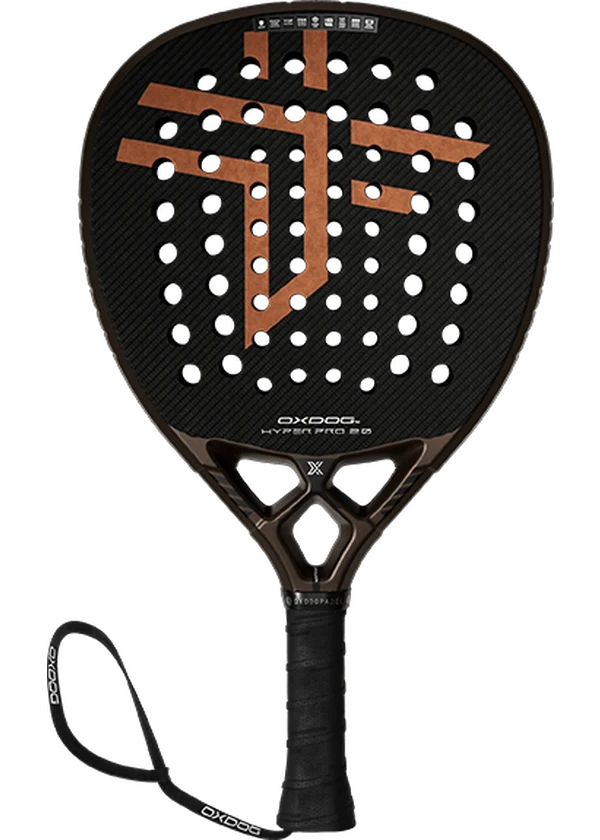
8 Parameters
Hyper Pro 2.0 2026
On this page
Review
Oxdog Hyper Pro 2.0 2026 Review: The Balanced Drop That Refuses to Choose a Side
Most drop-shape rackets make a deal: trade some control for top-end power and live with the consequences. The tension in the intermediate-to-advanced segment is usually between what the frame gives you on offense and what it costs you when the rally slows down. The Oxdog Hyper Pro 2.0 2026 is positioned precisely at that crossroads — a racket that refuses the usual trade-off and bets on doing both things reasonably well, at the same time.
Technically, this is a drop-shaped frame built around an EVA Medium+ foam core with a stiffness rating of 62 — firm enough to generate pace without eliminating feel. The surface uses Oxdog’s sandy-textured HES-Carbon finish, engineered for grip and spin production. The frame integrates PowerRibs reinforcement technology for torsional stability and energy retention, alongside a declared balance point of 268mm — head-leaning enough to give the swing some authority without turning it into a weapon you have to muscle through. Declared weight is 365g, with source variance between 360g and 370g. Part of the broader Oxdog lineup, it sits below the Hyper Pro+ 2.0 and above the Hyper Tour 2.0 in the Hyper family hierarchy.
Comfort is the outlier at 6.8 — the lowest score in this profile. Attacker 7.88 · Hybrid 7.68 · Defender 7.61. The 0.27-point spread between top and bottom profiles is the whole story: this racket leans toward attack without locking you in, but the comfort ceiling is real and it matters for longer sessions.
Performance Breakdown
How the Hyper Pro 2.0 2026 Plays
STABILITY 7.8
PowerRibs Earns Its Name Here
The drop shape and head-leaning balance give the swing a natural arc that produces pace without demanding a full swing. Power lands at 7.9 — not the aggressive top end of a dedicated attacker, but more than enough to threaten from mid-court. Stability at 7.8 is arguably the more useful number: the PowerRibs frame reinforcement holds the sweetspot geometry through off-center contact, which is where most intermediate players actually hit. For a drop-shaped racket in this price bracket, that torsional composure at 7.8 is what separates a functional power frame from one that punishes every mishit.
PLAYABILITY 7.5
The Number That Changes the Story
Control at 7.8 — matching Stability and nearly equaling Power — is the counterintuitive score in this profile. Drop-shape rackets at stiffness 62 typically surrender a point or more of control in exchange for pace, yet the EVA Medium+ core absorbs enough vibration to keep directional precision intact. Playability at 7.5 reflects the EVA Medium+ dampening doing its work: the racket responds to touch, not just aggression. This is what validates the hybrid framing. Players coming from softer round-shape rackets will find the transition manageable; the control floor doesn’t collapse under speed.
SWEETSPOT SIZE 7.5
Sandy Surface, Honest Results
The HES-Carbon sandy texture is doing real work at 7.6 spin — this isn’t cosmetic grip, it’s consistent topspin and slice production on contact. Sweetspot Size at 7.5 is solid for a drop shape at this stiffness level; the geometry narrows the hitting zone compared to a round, but the DSH (Double Size Holes) pattern widens the effective contact area to compensate. The practical outcome: spin and sweetspot scores that are close enough to make this racket forgiving in ways you wouldn’t expect from a head-heavy frame at stiffness 62.
MANEUVERABILITY 7.4
The Comfort Ceiling Is the Honest Caveat
Comfort at 6.8 is the profile’s weak point — and it’s the score that drives the Attacker profile lead. A stiffness of 62 with a head-heavy balance will transmit vibration into the arm over extended play; this is a physics outcome, not a manufacturing flaw. The EVA Medium+ core mitigates but doesn’t eliminate it. Field reports from comparable configurations note arm fatigue becoming perceptible after two hours of continuous play. Maneuverability at 7.4 is respectable given the 268mm balance point — the drop shape keeps the swing weight from feeling sluggish — but this is not a racket for players with active elbow or shoulder sensitivities.
Technology
PowerRibs + HES-Carbon: Does the System Justify the Architecture?
PowerRibs is Oxdog’s structural reinforcement system — internal ribs that stiffen the frame selectively to reduce energy loss at the point of contact and resist torsion on off-center hits. The outcome shows in the Stability score: 7.8 on a drop shape at stiffness 62 is higher than the category average, and that gap is directly attributable to frame geometry that doesn’t flex where it shouldn’t. For intermediate players hitting imperfect contact on fast-paced rallies, that translates to fewer wayward shots from mishits.
HES-Carbon (High Energy System) is Oxdog’s proprietary carbon weave, engineered for rapid energy transfer from swing to ball. The result is the Power score at 7.9 — a reading that confirms the material is doing its job rather than just carrying a name. Combined with the sandy surface texture, which bites the ball at contact to generate the 7.6 Spin score, the two systems together create a frame that is productive on both power shots and spin-heavy sequences without asking you to choose one or the other.
The DSH (Double Size Holes) pattern widens the effective hitting zone, which is why Sweetspot Size reaches 7.5 despite the narrower drop geometry. Vibradamp technology targets vibration reduction at the frame perimeter — it contributes to the Control score holding at 7.8 — but it cannot fully offset the stiffness penalty at Comfort 6.8. The RBS (Racket Balance System) allows 8g of removable weight adjustment, giving players the option to lighten the swing slightly at the cost of some power and stability. For players building toward a more attacking game, that adjustability is a genuine tool, not a gimmick.
The player who benefits most from this system stack is the intermediate-to-advanced attacker who wants to apply pressure from mid-court without sacrificing the control needed to stay in the point when the ball comes back fast. The technology earns what the scores confirm.
Player Fit
Who Should Buy the Oxdog Hyper Pro 2.0 2026?
The Intermediate Attacker Who Wants Insurance
If you’re the type who wants to take over points from mid-court but knows your technical game isn’t yet consistent enough to carry a pure attacker’s racket, this is the frame. You need Power at 7.9 and Stability at 7.8 to back your aggression — but you also need Control at 7.8 to survive the rallies where the initiative shifts. The 7.5 Sweetspot Size means your off-center contacts won’t cost you the point. You play mostly 2–3 times per week with enough intensity that comfort matters by the third hour, but your arm health isn’t currently a concern. This racket meets you exactly where you are and gives you a path forward without punishing your current ceiling.
Arm-Sensitive Players and Dedicated Defenders
The Defender score of 7.61 is the lowest in the profile, and the Comfort floor at 6.8 tells you exactly why. If you’re playing from the back of the court, absorbing pace and redirecting under pressure, a stiffness of 62 with a head-leaning balance is fighting against your game style — not supporting it. And if you already have elbow sensitivity, this racket will accelerate the problem, not manage it. The Maneuverability at 7.4 also means quick defensive exchanges at the net will feel slightly less instinctive than you want. This is a power-first drop-shape frame; the comfort gap is the honest cost of the performance architecture. Look elsewhere if that trade-off doesn’t suit you.
FAQ
Frequently Asked Questions
What is the PadelVerdict score for the Oxdog Hyper Pro 2.0 2026?
The overall PadelVerdict score is 8, with a Consensus Modifier of +0.1 applied. Profile breakdown: Attacker 7.88, Hybrid 7.68, Defender 7.61. Specs are consistent across multiple markets (Data Quality: neutral), specialist sources across multiple markets align on shape, surface, and frame technologies with no contradictions found (Field Validation: positive), but no independent physical measurements exist to go further (Market Correction: neutral). That Field Validation component is what earns the +0.1. The 0.27-point spread between Attacker and Defender profiles tells you this racket has a clear lean — but not an extreme one.
Is the Oxdog Hyper Pro 2.0 2026 good for intermediate players?
Yes — with one honest caveat. Playability at 7.5 and Sweetspot Size at 7.5 make it accessible for players who aren’t yet hitting the sweetspot consistently. The EVA Medium+ core keeps the response manageable. The caveat is Comfort at 6.8: if you’re building technique and playing long sessions, the stiffness will make itself known. For intermediate players who play a couple of times per week without existing arm issues, this is a strong fit. For complete beginners, it’s a step too demanding.
Is the Oxdog Hyper Pro 2.0 2026 good for attacking players?
Yes. The Attacker profile leads at 7.88, backed by Power 7.9, Stability 7.8, and Control 7.8 — a combination that gives attacking players both the pace and the precision to apply consistent pressure. The sandy surface adds Spin at 7.6 for aggressive topspin shots. If you’re looking for more attacker-profile rackets to compare, the profile page has the full range. The Hyper Pro 2.0 2026 sits comfortably in the upper tier of that category.
What is the actual weight of the Oxdog Hyper Pro 2.0 2026?
Declared weight is 365g, but sources across multiple markets show variance between 360g and 370g — a 10g spread. No independent on-camera measurements exist to pin down the real number. A 5g difference from declared weight is generally imperceptible on court; a 5g over-declaration at the heavier end of the range would slightly increase swing weight, which could amplify the Comfort concern after extended sessions. Until independent measurements confirm the figure, treat 360–370g as the working range.
How does the Oxdog Hyper Pro 2.0 2026 compare to the Hyper Pro+ 2.0 2026?
These are two distinct player types, not two versions of the same thing. The Hyper Pro 2.0 uses EVA Medium+ foam — it retains touch and is accessible to intermediate players who want power without fully committing to a hard-hitting profile. The Hyper Pro+ 2.0 runs a harder core, positions itself as the more aggressive option, and is aimed squarely at advanced players who prioritize power and precise control over comfort and accessibility. If you’re still developing consistency, the Pro 2.0 is the correct choice. If you’re an experienced attacker who wants maximum response and doesn’t need the softer buffer, the Pro+ is the upgrade path.
Why does the Oxdog Hyper Pro 2.0 2026 have a Consensus Modifier of +0.1?
Three components determine the modifier. Data Quality is neutral: specs are consistent across multiple markets but that consistency alone doesn’t earn a positive result. Field Validation is positive: specialist sources across multiple markets agree on shape, surface material, frame technologies, and positioning within the Oxdog lineup, with no contradictions or implausible claims identified — that convergence earns the positive signal. Market Correction is neutral: no independent physical measurements exist to confirm the declared specs. The +0.1 comes entirely from the Field Validation component. Independent measurements of weight, balance, and stiffness would be required to push the modifier higher.
Similar Rackets
Independent testing, funded by readers
No brand deals, no sponsored picks. If you found this useful, you can support the next round of tests with a small tip.

