
Hyper Tour X 2.0 2026
The Best of Both Worlds, or a Compromise?
The short verdict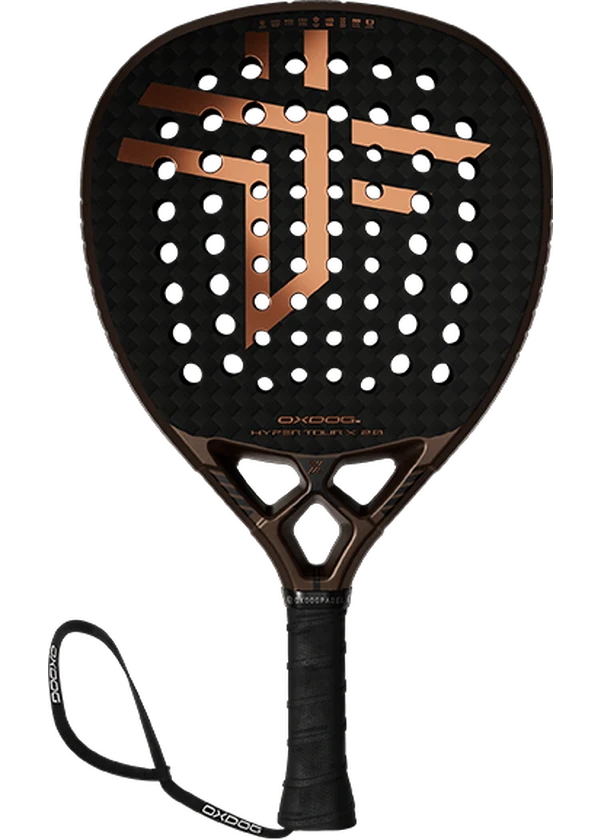
8 Parameters
Hyper Tour X 2.0 2026
On this page
Review
Oxdog Hyper Tour X 2.0 2026 Review: The Best of Both Worlds, or a Compromise?
The perpetual tension in padel equipment sits between two outcomes: a racket that does one thing brilliantly, or one that does everything well enough to never hold you back. Most players eventually drift toward specialization, chasing power off the back wall or surgical control at the net. The Oxdog Hyper Tour X 2.0 2026 makes a deliberate bet on the second camp — not as a compromise, but as a design principle. Whether that bet pays off depends entirely on who is holding it.
Built around a drop shape with an EVA Medium foam core and HES Carbon 8K surface featuring a 3D textured matte finish, the Hyper Tour X 2.0 carries a declared weight of 363g and a mid balance point at 260mm. The proprietary technology stack includes PowerRibs for frame rigidity and vibration reduction, Vibradamp for a three-layer wrist-to-shoulder comfort buffer in the handle, DSH (Double Size Holes) for expanded sweetspot coverage, and the RBS (Racket Balance System) — a removable 8g weight that allows balance point adjustment. Stiffness is rated at 60, sitting in firmly medium-high territory. It’s positioned as the most versatile model in the Hyper 2.0 family, sitting above the Tour and Match variants, and below the Pro+.
Control leads at 8.1 — the highest single parameter in the set. Attacker 7.71 / Hybrid 7.99 / Defender 7.98. The near-identical Hybrid and Defender scores tell the real story: this racket serves the all-court game, not a single position.
Performance Breakdown
How the Hyper Tour X 2.0 2026 Plays
PLAYABILITY 8.0
Control Is the Architecture, Not the Afterthought
Drop-shaped rackets at this weight and stiffness level don’t always prioritize feel — but the EVA Medium core changes that equation. The medium density foam absorbs just enough energy to preserve touch in the short game and on defensive transitions, while the HES Carbon 8K frame still converts pace on counter-attacks. Control at 8.1 is the top score in the set and anchors everything else: it’s the reason Playability reaches 8.0 without being pulled down by stiffness artifacts. The result is a racket that stays readable across all phases of a point, not just when you’re in position.
SWEETSPOT 7.9
A Stiff Carbon Racket That Won’t Punish Your Elbow
A stiffness rating of 60 with carbon construction would typically raise durability concerns for arm-sensitive players — the Vibradamp system in the handle is the reason it doesn’t. The three-layer vibration dampening manages energy at the grip before it reaches the wrist and shoulder, and Comfort lands at 8.0 as a result. Paired with the DSH Double Size Holes expanding the usable striking zone, Sweetspot Size reaches 7.9 — meaning off-center contact costs less than you’d expect from a carbon frame at this stiffness level. No structural durability issues have been identified in available data, and the PowerRibs reinforcement is specifically engineered to limit frame fatigue over time.
STABILITY 7.6
Power Exists — But This Isn’t a Hammer
Power at 7.5 is the lowest score in the set, and that gap is intentional, not accidental. The HES Carbon 8K delivers linear energy return on clean counter-attacks and overhead smashes, but the racket’s design doesn’t prioritize shot-ending power generation above everything else. Stability at 7.6 reflects the mid-balance configuration: solid in defensive baseline exchanges, but players who live off the back wall and expect a bigger trampoline effect will notice the ceiling. The RBS system allows minor balance point adjustment, which can marginally shift both figures depending on individual tuning — but the baseline character doesn’t change. These are the scores that explain why the Attacker profile (7.71) trails the other two by a meaningful margin.
SPIN 7.2
Quick in Transition, Honest on Spin
At 363g with a mid balance and frame profiled to minimize air resistance, the Hyper Tour X 2.0 moves well through net exchanges and defensive scrambles — Maneuverability at 7.8 reflects a racket that doesn’t feel heavy under pressure. Spin at 7.2 is the one genuinely counterintuitive result here: the 3D textured matte surface on HES Carbon 8K is specifically designed to increase ball grip for topspin and slice, and the DSH hole pattern contributes to spin generation, yet the score sits at the bottom of the range. The honest interpretation is that while the surface aids spin, the overall frame geometry and mid balance don’t amplify rotational intent the way a top-heavy diamond or dedicated drop-shaped racket built purely for spin would. It generates spin — it just doesn’t specialize in it.
Technology
HES Carbon + PowerRibs + Vibradamp: Does the Stack Deliver More Than the Sum of Its Parts?
HES Carbon (High Energy System) is the structural backbone of the Hyper Tour X 2.0. The 8K weave at the frame and surface level is designed to convert incoming ball energy into outgoing velocity — which is exactly what Power at 7.5 and Stability at 7.6 represent: competent but not exceptional energy return, consistent across clean contact points. The surface weave also provides the ball grip that contributes to Spin at 7.2 and the textured baseline from which the 3D matte finish works.
PowerRibs are structural reinforcements along the frame rails that serve two purposes simultaneously: they increase rigidity for more consistent energy transfer on contact, and they reduce frame flex-induced vibration after impact. This dual function is why Stability (7.6) and Comfort (8.0) don’t contradict each other — a stiffer frame can still be comfortable when the vibration pathway is interrupted before it reaches the handle.
Vibradamp takes the comfort equation a step further by adding a three-layer dampening system inside the handle itself. Where PowerRibs manage vibration at the frame, Vibradamp absorbs residual energy before it travels up the arm — the combination is what justifies Comfort at 8.0 on a stiffness-60 carbon frame. Players with arm sensitivity who have historically avoided carbon constructions will find this combination meaningful.
DSH (Double Size Holes) expands the usable striking zone by increasing the hole diameter in the hitting surface, which reduces foam-to-frame resistance on off-center contact and directly supports Sweetspot Size at 7.9 and Playability at 8.0. The RBS (Racket Balance System) is the most flexible element: the removable 8g weight in the handle allows the balance point to shift slightly toward head-light or head-neutral, giving players marginal control over the Maneuverability-vs-Stability tradeoff without changing rackets. The stack answers yes — it earns its complexity by connecting each technology to a measurable on-court outcome.
Player Fit
Who Should Buy the Oxdog Hyper Tour X 2.0 2026?
The Intermediate-to-Advanced All-Court Player Who Refuses to Specialize
If you’re the type who defends hard from the back wall, pushes forward to finish points at the net, and doesn’t want to switch rackets as your game evolves — this is built for you. Control at 8.1 and Playability at 8.0 give you the precision to work the point, while Comfort at 8.0 means you can play long sessions without paying for it with your arm. The near-identical Hybrid (7.99) and Defender (7.98) profile scores confirm there’s no phase of the game where this racket actively lets you down. Browse the full hybrid racket category to see how it sits in the field. You’re not choosing a style — you’re choosing consistency, and the data backs that decision. The same logic drives our tested picks for intermediate players in 2026, where this all-court profile earns its spot.
The Power-First Attacker Who Needs a Weapon, Not a Tool
If your game is built on aggressive baselining, high-damage smashes, and using the glass to generate extra pace, Power at 7.5 and Stability at 7.6 will feel like a ceiling rather than a platform. The Attacker profile score of 7.71 — the only one meaningfully below the other two — is the honest signal: this racket doesn’t want to be a weapon. Players who thrive on raw shot-ending power and want a heavier, top-balanced diamond construction will find the Hyper Tour X 2.0 too measured for their game.
FAQ
Frequently Asked Questions
What is the PadelVerdict score for the Oxdog Hyper Tour X 2.0 2026?
The overall PadelVerdict score is 7.9, with a Consensus Modifier of +0.1 applied. Specs are consistent across multiple markets (Data Quality: neutral), specialist sources across multiple markets align on core parameters with no contradictions found (Field Validation: positive), but no independent physical measurements exist to go further (Market Correction: neutral). That Field Validation component earns the +0.1. Profile breakdown: Attacker 7.71 / Hybrid 7.99 / Defender 7.98. The near-zero gap between Hybrid and Defender is the decisive number — this racket suits complete players, not specialists.
Is the Oxdog Hyper Tour X 2.0 2026 good for intermediate players?
Yes, directly. Playability at 8.0 and Sweetspot Size at 7.9 mean the racket is forgiving enough to reward developing technique without masking errors in a way that stalls progression. Comfort at 8.0 via the Vibradamp system also protects arm-sensitive players who are still building shot consistency. This is a legitimate first carbon racket for the advancing intermediate — not a beginner tool, but genuinely accessible at this level.
Is the Oxdog Hyper Tour X 2.0 2026 good for hybrid players?
Yes. The Hybrid profile score of 7.99 is the joint-highest result alongside Defender, and Control at 8.1 with Playability at 8.0 confirm the all-court capability. If you build points from the back and finish at the net, those numbers validate the instinct. See all hybrid rackets in our database for full context on how this one compares across the category.
What is the actual weight of the Oxdog Hyper Tour X 2.0 2026?
Declared weight is 363g, but the variance across sources runs from 360g to 365g — a 5g spread with no independent measurements to anchor it. On court, a difference of that magnitude is unlikely to be perceptible during play, but it does mean you can’t confirm exact weight before purchase without measuring the specific unit yourself. The RBS system adds an 8g adjustable weight, so the functional weight range can shift slightly depending on configuration.
How does the Oxdog Hyper Tour X 2.0 2026 compare to the Hyper Pro 2.0?
The Tour X 2.0 is the all-court proposition — mid balance, EVA Medium core, optimized for players who need to perform across all phases of a point. The Hyper Pro 2.0 sits above it in the lineup with a top-balance configuration, tilting toward attack-oriented players who want more power and overhead authority in exchange for slightly reduced maneuverability. Choose the Tour X if you want a complete racket; choose the Pro if power generation is the priority and you’re willing to pay for it in feel and arm comfort.
Why does the Oxdog Hyper Tour X 2.0 2026 have a Consensus Modifier of +0.1?
The +0.1 reflects a process that separates consistency from validation. Specs appearing uniformly across sources earns neutral — that’s the baseline, not a reward. What moves the modifier is specialist-level convergence: sources across multiple markets independently describe the same performance characteristics — shape, balance, core behavior, and technology function — without contradiction. That cross-market alignment is the condition for a positive adjustment. The ceiling stays at +0.1 because no independent physical measurements of weight or balance exist to go further.
Similar Rackets
Independent testing, funded by readers
No brand deals, no sponsored picks. If you found this useful, you can support the next round of tests with a small tip.

